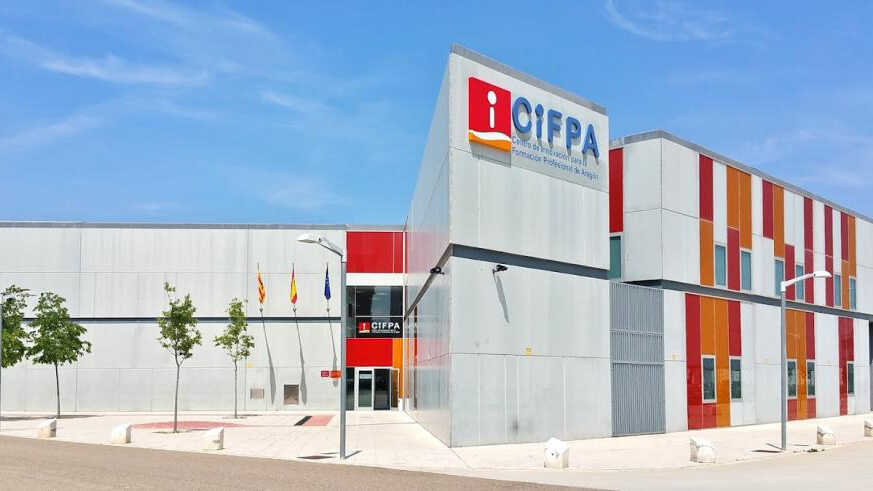
The report places particular focus on the Aragon Centre for Innovation in Vocational Training (CIFPA), describing it as a unique structure that brings together different functions related to training and innovation. The centre provides regional support for innovation, serves as the National Reference Centre for Commercial Logistics and Transport Management, and is also a Centre of Excellence in Transport and Logistics.
CIFPA AMONG SPAIN'S LEADING CENTRES
Initiatives developed by CIFPA include training programmes for teaching staff, the management of calls for applied innovation projects and the promotion of challenge-based learning through the so-called A.0 Cycles. The centre also has a digital map that makes it possible to view innovation initiatives developed in Aragon's vocational education and training system.
The director general of Planning, Centres and Vocational Training, Luis Mallada, said the study's conclusions represented recognition of the growth of vocational training within the innovation system. "Vocational training must occupy a fully recognised place, not as a complement but as a structural component," he said. In his view, the link between vocational training, innovation and research is a reality that must continue to gain visibility.
INNOVATION AND SOCIAL IMPACT
The study analyses this relationship from two perspectives: how innovation is transforming vocational training and how vocational training itself can generate innovation in companies and the wider social environment. The study drew on documentation, interviews, discussion groups, surveys of educational centres and various specific experiences developed in the field of innovation.
Among its main conclusions, the report states that vocational training makes a particularly significant contribution to generating applied innovation in the productive system, facilitates the transfer of knowledge to companies and enables new technologies and techniques to be incorporated through students and graduates. It also highlights its impact on social innovation, inclusion and territorial cohesion.
In Aragon, CIFPA is presented as one of the structures capable of strengthening relations between educational centres, companies and the R&D&I system. "The objective is for the R&D&I system to fully recognise vocational training as an essential actor in the science, technology and innovation system, definitively overcoming the limited view that sometimes reduces it to a mere provider of talent," Mallada concluded.