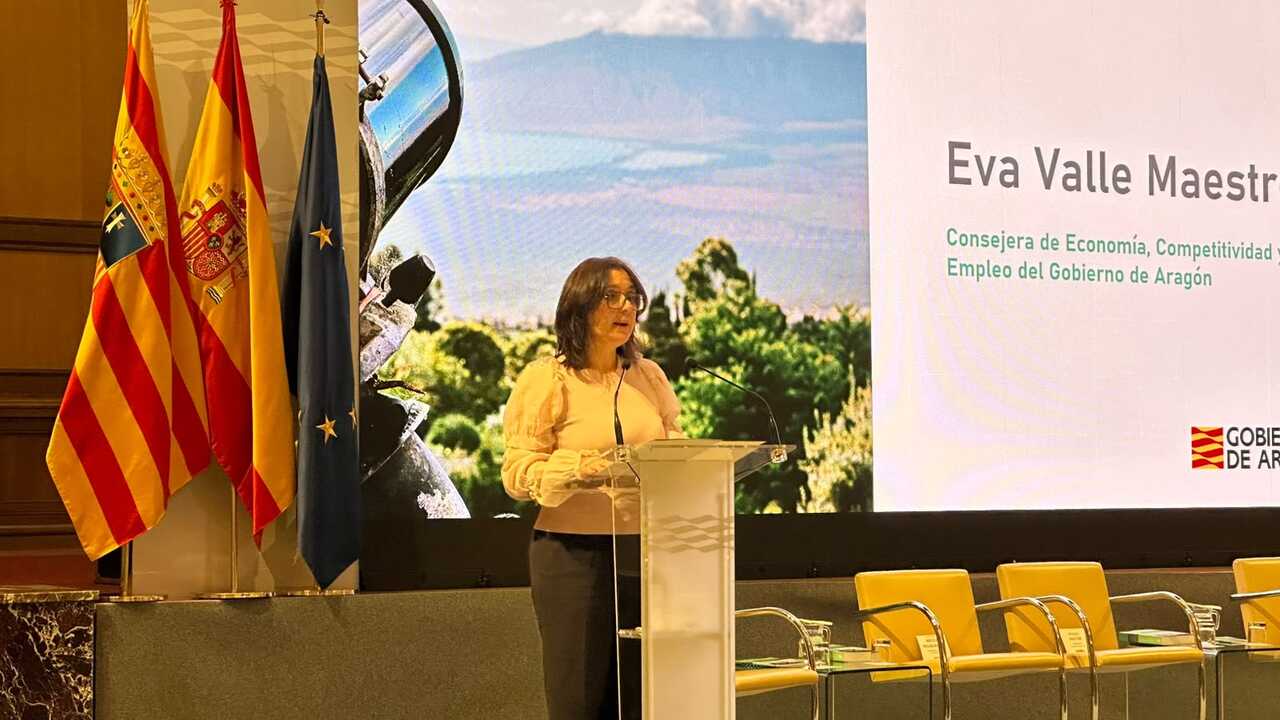
During her speech, Valle highlighted that Aragon's economy is going through a positive period despite the challenging international situation. She explained that the data included in the report show that the main productive sectors have managed to adapt to difficulties. However, she warned that Aragon must continue working to improve productivity, promote innovation and create more opportunities and quality jobs.
MAJOR INVESTMENTS, AN OPPORTUNITY FOR ARAGON
One of the aspects highlighted by Eva Valle was the arrival of major investments in Aragon. The director general said that these initiatives could represent a unique opportunity to secure the region's economic future, provided that their benefits reach the business community as a whole and enable the development of high-value-added activities.
In this regard, she praised CESA's work in preparing a report that brings together the views of companies, social partners and experts. She also stressed the importance of addressing issues such as housing, rural development, digital transformation, the integration of foreign workers and social dialogue to improve competitiveness and the quality of life of Aragon's residents.
ARAGON'S RURAL AREAS HAVE A FUTURE AND OPPORTUNITIES
For his part, CESA President Juan García Blasco argued that Aragon is a "land of opportunities", both because of its economic growth and its low unemployment levels. He noted that the region is among Spain's autonomous communities with the lowest unemployment and, if economic activity continues to increase, could move closer to a situation of full employment.
García Blasco also wanted to convey an optimistic message about Aragon's rural areas. He explained that the study prepared by the organisation identifies counties where new economic activities are growing, particularly those linked to industry and the agri-food sector. These initiatives are creating jobs and helping to retain residents. However, he acknowledged that the lack of housing and generational renewal remain two of the main concerns for people who live and work in rural communities.
HOUSING AND IMMIGRATION, TWO KEY CHALLENGES
Housing features prominently among the report's recommendations. The CESA president called for a major agreement between public authorities and the private sector to address the problem. He recalled that housing is essential not only to facilitate access to a home, but also to fill jobs, attract residents and support economic development, especially in rural areas.
Finally, García Blasco highlighted the role of immigration in Aragon's future. He explained that the arrival of foreign residents is essential to tackling the demographic challenge and filling jobs that would otherwise remain vacant. For this reason, he argued that integration must extend beyond the labour sphere. Both the CESA president and Eva Valle agreed on the importance of making the most of current economic opportunities while continuing to address the social challenges that will shape the region's future.