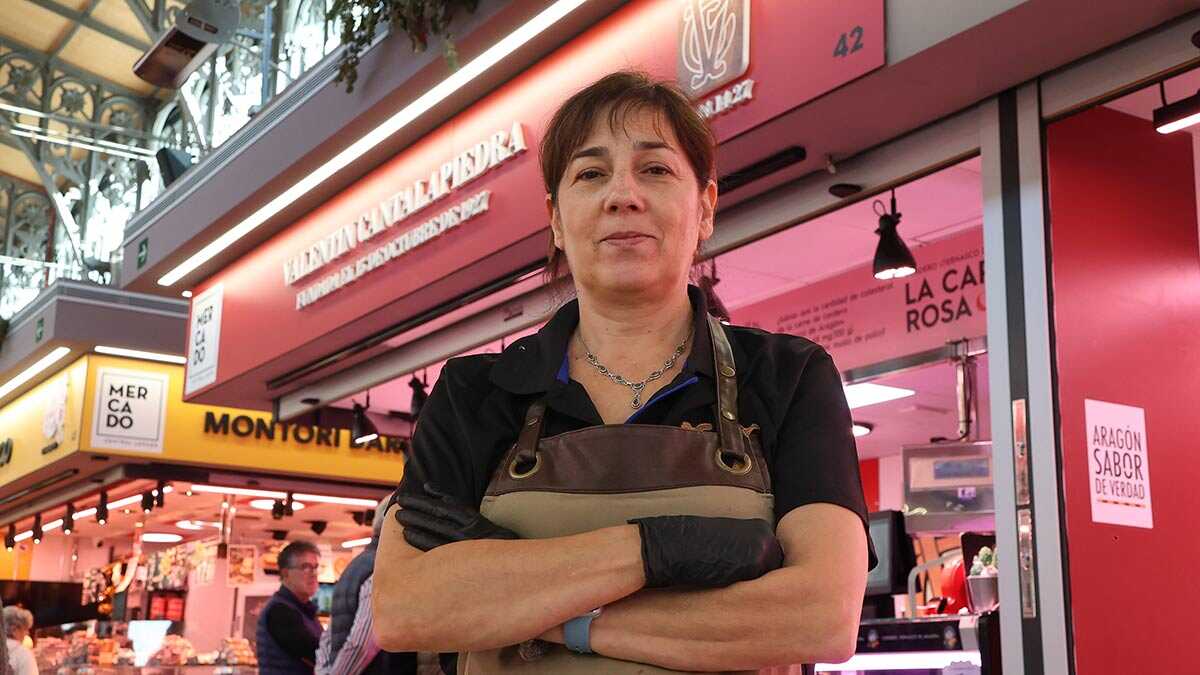
Ester puts prices at a level similar to that of a year ago, but warns that weekly increases are still taking place. “Things aren't really in a state where we can raise many prices,” she insists. What she does maintain, she says, is the quality of the product: “It doesn't vary; we all follow the same standards.” Even so, the sector is keeping an eye on the weather, because “the heat affects everything — livestock and drought”.
Local produce helps ease transport costs in a business that concentrates its major Pilar sales before the festivities
LOCAL PRODUCE LIMITS THE IMPACT OF FUEL PRICES
Working with nearby suppliers provides some relief from rising fuel costs. “We work with local produce,” Ester explains. Shorter distances limit the impact of transport on the costs of her butcher's shop: “We don't have those problems of saying that a truck from Almeria costs 800 euros more in fuel. That doesn't happen here.”
PILAR SALES TAKE PLACE BEFORE THE FESTIVITIES BEGIN
At her counter, the busiest period for Pilar sales comes before the festivities. “You work 15 days before Pilar; that's when you make the big sales,” she says. Purchases made beforehand account for a large share of activity, while the days of celebration do not necessarily translate into higher sales.
In fact, business can slow during the festivities: “Pilar sales are already regular sales, rather a little quieter than usual.” Once that date has passed, it is time to prepare for the next campaign. At Ester's butcher's shop, Christmas begins well before December: “We start the Christmas campaign after the November long weekend.”