The project involves an investment of seven million euros and focuses on the design, development and production of a new structural component for Mercedes-Benz electric vehicles. Since 2022, the company has invested 8.6 million euros in its plant in Zaragoza, Valle explained, highlighting that these initiatives enable the company to “compete in necessary technologies” and respond to demand for new electric vehicles.
NEW TECHNOLOGY TO BUILD THE CARS OF THE FUTURE
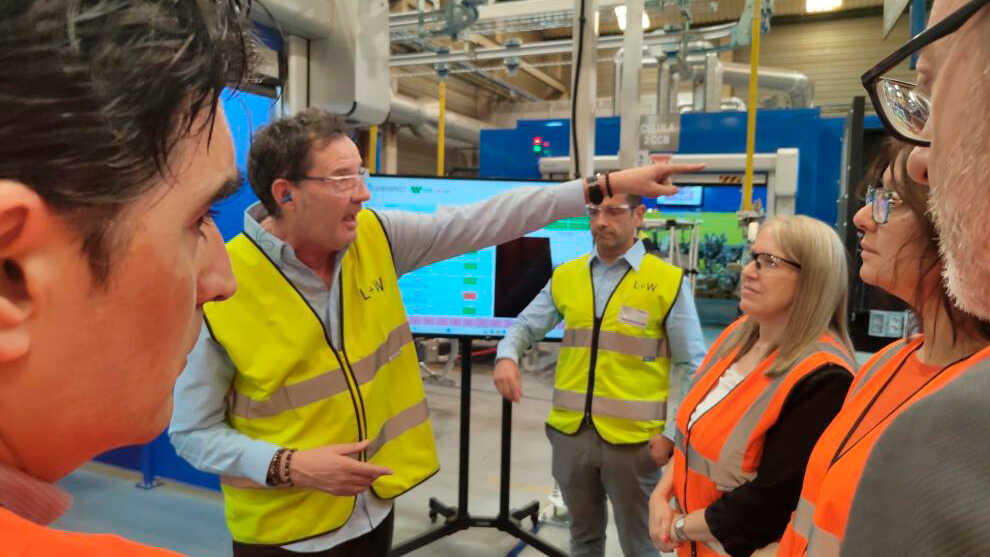
The technological leap is directly evident on the production lines. The factory has introduced robotic welding cells, artificial vision systems, advanced robotics, contactless dimensional controls and artificial intelligence, as well as solutions designed to improve energy efficiency. With these tools, the plant can manufacture increasingly complex structural components and adapt to new market demands.
The modernization has also increased the factory’s capacity and flexibility to produce components for both electric and combustion-engine vehicles. The project has created around 20 skilled jobs in areas such as quality and maintenance, bringing the workforce to 120 employees. The plant is also working with the first Chinese manufacturer established in Aragon to develop a new product for new-energy vehicles.
SUPPORT FOR INNOVATION IN ARAGON’S AUTOMOTIVE INDUSTRY
The Government of Aragon has supported these types of projects through various aid programs, particularly those aimed at Industrial Transformation and Development (TDI). Valle explained that more than 26 million euros have been allocated to these programs during 2026, benefiting nearly 70 Aragonese companies. The minister cited Linde+Wiemann as an example of a company whose competitiveness is based on “continuous innovation” and its ability to adapt to changes in an increasingly demanding industry.
According to Valle, the automotive industry is a “core” sector for Aragon’s economy and accounts for more than 5.4% of employment in the region. In response to the transformation facing the automotive industry, the minister said the regional government maintains a position of “technological neutrality”: “What we want is for the sector to remain alive, remain dynamic, continue operating and continue generating jobs, wealth and well-being for the people of Aragon.” She also highlighted the “pragmatism” of Aragon’s industry in investing in new technologies and adapting to an increasingly complex international environment.